The Library of Alexandria: The Greatest Mystery of Ancient Knowledge


Introduction:


The Library of Alexandria stands as one of the most renowned and fascinating cultural and scientific marvels of antiquity. Located in Alexandria, Egypt—Alexander the Great's vision for a cosmopolitan hub—the library symbolized a bold endeavor to collect and preserve all human knowledge. While its legacy is shrouded in mystery and its destruction lamented as a monumental loss, the Library of Alexandria remains a testament to human curiosity, ambition, and intellectual progress.


The Library of Alexandria, 19th-century artistic rendering by German artist O. Von Corven, based partially on the archaeological evidence. ( Public domain )


Origins and Foundation:


Forschungen in Ephesos", Vol. III, Vienna 1923, p.128. published by Tomisti ( public domain )


Inscription regarding Tiberius Claudius Babillus of Rome (d. 56 CE) which confirms that the Library of Alexandria must have existed in some form in the first century AD.


The foundation of the Library of Alexandria was intrinsically tied to the ambitions of the Ptolemaic dynasty. After Alexander the Great founded Alexandria in 331 BCE, his successor, Ptolemy I Soter, aimed to transform the city into a center of learning and cultural exchange. Inspired by the library in Athens established under Peisistratos and other Greek and Near Eastern traditions, Ptolemy I sought to create a repository of universal knowledge. His vision was later realized under his son, Ptolemy II Philadelphus, who oversaw the construction of the Mouseion—a larger research institute dedicated to the nine Muses of Greek mythology, of which the library was a central feature.


Ptolemy II Philadelphus Founds the Library of Alexandria
Vincenzo Camuccini (Public Domain)


The Ambitious Scope:


What set the Library of Alexandria apart from its predecessors was its unparalleled ambition to collect every known text in the world. Ptolemaic rulers implemented aggressive and innovative policies to achieve this mission. Royal agents were dispatched across the Mediterranean and beyond, equipped with substantial funds to purchase texts from authors and collectors. Legend holds that all manuscripts aboard ships docking at Alexandria’s harbor were seized, copied by scribes, and returned—sometimes with the originals retained and the copies returned instead. Estimates of the library's collection vary, with scholars suggesting a range from 40,000 to 400,000 scrolls at its zenith.


Plan of Alexandria c 30 BC Otto Puchstein 1890s. ( public domain)


Knowledge and Innovation: 


The Library of Alexandria not only preserved knowledge but actively fostered intellectual inquiry and innovation. Scholars, poets, mathematicians, and scientists from diverse backgrounds were drawn to Alexandria by the generous patronage of the Ptolemaic court. Resident academics were provided with housing, stipends, and access to vast resources. Key figures associated with the library included:


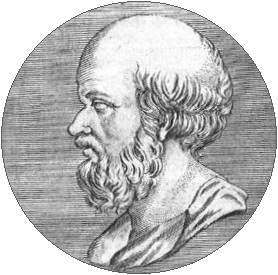
Eratosthenes of Cyrene, who calculated the Earth's circumference with remarkable accuracy.


Etching of an ancient seal identified as Eratosthenes. Philipp Daniel Lippert [de], Dactyliothec, 1767. ( Public domain )


Archimedes, whose "Archimedes' screw" revolutionized engineering and agriculture.


Illustration représentant Archimède

Dr. Manuel (CC BY-SA)


Callimachus, who created the Pinakes, an early bibliographic catalog organizing works by subject and author.


Portrait of Callimachus, Wiliam Henry Toms, 1755 ( public domain )


Aristarchus of Samos, who proposed a heliocentric model centuries before Copernicus.


Aristarchos of Samos, monument Aristotle University of Thessaloniki/Greece, Dr. Manuel (CC BY-SA)


Through its lecture halls, gardens, and dining spaces, the Mouseion resembled a modern university campus, facilitating interdisciplinary dialogue. Fields such as astronomy, medicine, mathematics, and philology advanced significantly thanks to this vibrant intellectual environment.


A Symbolic Loss: 


Despite its grandeur, the Library of Alexandria became a tragic symbol of the fragility of knowledge. Accounts of its destruction vary widely, with historians attributing its loss to multiple incidents. Some sources claim that Julius Caesar’s siege of Alexandria in 48 BCE resulted in a fire that consumed part of its collection. Others suggest that the library suffered gradual neglect during the decline of the Ptolemaic dynasty and subsequent Roman rule. By the time of Emperor Aurelian’s invasion in the 3rd century CE, the library—or its remaining fragments—was likely destroyed.

Interestingly, the Serapeum, a "daughter library" established near the Serapis temple, continued to house scrolls even after the original library's decline. However, this too was dismantled in 391 CE under the orders of Bishop Theophilus during a Christian crackdown on pagan sites. By this time, the great Library of Alexandria had faded into myth.


Alexandria - View of ruins of the Serapeum from Pompey's Pillar, published by Daniel Mayer, 2008. ( Public domain)


Surviving Knowledge:


The loss of the Library of Alexandria has often been compared to losing the internet today—a catastrophic disruption to the dissemination of knowledge. Yet not all was lost. Monks, scholars, and scribes painstakingly copied and preserved many texts originally housed in the library. These works continued to influence medieval Europe, the Islamic Golden Age, and the Renaissance. For instance:

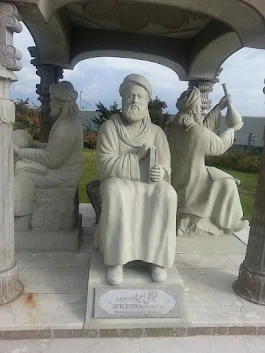
Ancient Greek medical texts informed Islamic scholars like Avicenna.


Persian Scholar Pavilion in Vienna International Centre donated by Iran. Jun 2009, published by Yamaha5 in wiki Commons ( public domain )


Astronomical and mathematical advancements influenced later European developments, including the work of Copernicus and Galileo.


Galileo Demonstrating His Telescope,Henry-Julien Detouche (Public Domain)


Cropped image of page 9 verso of the autograph manuscript of Nicolaus Copernicus: De Revolutionibus Orbium Coelestium (1520-1541)
Published in Wikimedia Commons ( public domain )


The organization and cataloging techniques of the Pinakes served as a precursor to modern libraries.


British Museum Reading Room Panorama. ( Public domain)


Legacy in Modern Times:


The Library of Alexandria serves as an enduring metaphor for the pursuit of knowledge and the necessity of its preservation. Recognizing this legacy, the Bibliotheca Alexandrina was inaugurated in 2002 near the site of the ancient library. Designed to embody the spirit of its predecessor, this contemporary library houses millions of books, research facilities, and state-of-the-art digital archives. While it may never replicate the grandeur of the original, the Bibliotheca Alexandrina symbolizes a renewed commitment to learning and global collaboration.


The Bibliotheca Alexandrina's interior, from near the top, published by Carsten w ( public domain)


Conclusion: 


The Library of Alexandria remains a poignant reminder of human ambition and vulnerability. Its founders' vision to centralize all knowledge of the ancient world reflects a boundless curiosity that transcends cultures and eras. Simultaneously, its loss underscores the impermanence of even the greatest achievements without the diligence to preserve them. The story of the library is not just a narrative about books but a testament to the universal and timeless value of knowledge in shaping civilizations. Through continued efforts to study, document, and disseminate wisdom, we honor the legacy of this ancient treasure that forever changed the intellectual history of humanity.


Bibliography :


Books:


1. Canfora, L. (1990). The Vanished Library: A Wonder of the Ancient World. University of California Press.

2. El-Abbadi, M. (1992). The Life and Fate of the Ancient Library of Alexandria. UNESCO Publishing.

3. Kassab, G. (1998). Alexandria, a City of Knowledge. Dar al-Maarif.

4. Fraser, P. M. (2001). Ptolemaic Alexandria. Oxford University Press.

5. Hardy, G. H. (1971). Libraries of Ancient Alexandria and Rome. Greenwood Press.


Journal Articles:


6. MacLeod, R. (2000). “The Library of Alexandria: Centre of Learning in the Ancient World.” History Today, 50(7), 16–23.

7. Canfora, L. (1990). “Destruction of the Alexandrian Library: Examining the Evidence.” The Classical Quarterly, 38(2), 555–567.

8. Kassab, G. (1987). "Science, Knowledge, and Alexandria." Journal of Ancient History, 21(4), 422–439.

9. Thompson, D. J. (2003). “Philology at the Library of Alexandria.” Journal of Hellenic Studies, 123, 85–98.

10. Grafton, A. (2008). "Lost Libraries of Alexandria: A History." American Historical Review, 113(5), 1391–1412.


Online Resources and Databases:


11. UNESCO. (2002). The Alexandria Library Revival Project. 

12. Bagnall, R. (2008). “Papyrology and the Lost Texts of Alexandria.” Open Access Journal of Papyrology. Read Online

13. Library of Congress. (n.d.). "Legacy of the Alexandria Library." Digital Collection


Dissertations and Theses:


14. Alkins, J. R. (1989). Knowledge and Power: The Alexandrian Library under Ptolemaic Rule. (Doctoral dissertation). University of Michigan.

15. Thompson, G. B. (2012). The Role of the Museum and Library in Ancient Alexandria. (Master's thesis). University of Oxford.


Conference Proceedings: 


18. Hussain, M., & Robinson, J. (Eds.). (2010). Alexandria Revisited: Papers from the International Conference on Knowledge in Antiquity. Institute of Hellenic Studies, Athens.


The Bizarre Practice of Eating Egyptian Mummies as Medicine in the 16th Century


In the annals of medical history, few practices are as peculiar as the European consumption of Egyptian mummies as medicine. This trend, prevalent in the 16th and 17th centuries, reveals much about the intersections of science, pseudoscience, culture, and commerce in early modern Europe. What appears today as macabre folly was, at the time, regarded as mainstream medical practice, even endorsed by prominent physicians. By examining the historical, cultural, and medical underpinnings of mummy medicine, we can better understand how such a bizarre practice came to be.


Old engraved illustration of Egyptian embalming process ( embalming, or treating the dead body, that the ancient Egyptians used is called mummification) – stock photo


Historical Origins and Misunderstandings:


Published in ( historycaleve.com )


The concept of using human remains for medical purposes predates the Renaissance. Ancient Greek and Roman medical traditions set the stage for such practices, venerating substances like bitumen, a natural resin used for embalming. Bitumen, known for its alleged medicinal properties, was called mumia in Arabic. However, a linguistic conflation occurred over time: instead of referring to bitumen, "mumia" began to describe the embalmed bodies themselves.


Apothecary vessel (albarello) with inscription (MUMIA) dating 
to 18th century at Deutsches Apothekenmuseum Heidelberg, Germany, created by Bullenwächter, December 2011, published in Wikimedia Commons.


Apothekary vessel with inscription « MUMIÆ » and inventary number « No 217 ». The object is a part of the pharmacists collectioin of Museums für Hamburgische Geschichte, created
 by Christoph Braun, 2012, published in Wikimedia Commons


Greek historians like Herodotus and Diodorus Siculus documented the use of bitumen in Egyptian mummification, giving rise to the European assumption that embalmed remains carried potent curative properties. By the late Middle Ages, European interest in Egyptian artifacts—and by extension, mummies—had grown substantially. Stories of the exotic East coupled with rising Egyptomania imbued mummies with an almost mystical allure, paving the way for their commodification.


Natural formed Bitumen collected at the Dead Sea shore, published in Wikimedia Commons by Daniel Dzvi.


Renaissance Medicine and the Allure of Mummy Powder


The medical practices of Renaissance Europe were deeply influenced by humoral theory, the belief that health depended on balancing the body's four humors: blood, phlegm, black bile, and yellow bile. Physicians of the time sought remedies that would "restore balance" by transferring vitality or counteracting disease. In this context, powdered mummy—rich in the imagined life force of the ancient deceased—was seen as an ideal solution.


Renaissance Apothecary Mortar : Muzea Malopolska, A 17th-century apothecary mortar used for grinding, reflecting tools used in Renaissance pharmacies.


Paracelsus, a Swiss physician and alchemist, played a significant role in popularizing the medicinal use of human remains. He argued that the human body contained unique, unparalleled curative properties, leading him and his followers to promote therapies involving human blood, fat, and bones. Mummy medicine became intertwined with this broader trend of medical cannibalism.


Aureolus Theophrastus Bombastus von Hohenheim [Paracelsus]. Reproduction, 1927, of etching by A. Hirschvogel, 1538. Published in Wikimedia Commons ( public domain )


In the cultural milieu of early modern Europe, Egyptian mummies symbolized immortality and mystery. Their perfect preservation was interpreted as evidence of exceptional vitality, feeding the belief that consuming them could impart health benefits. Physicians marketed mummy powder as a panacea for ailments ranging from headaches and internal bleeding to epilepsy and gout.


Published in Flickr.com, public domain 


Papyrus of Anubis preparing a mummy : a detail from the papyrus of Ani, a Theban Book of the Dead from the British Museum’s collection. (Photo by CM Dixon/Print Collector/Getty Images)


Trade, Fraud, and Ethics:


The mummy trade became a lucrative, albeit morally questionable, enterprise. Egyptian tombs were plundered, and the remains of pharaohs and commoners alike were exported to Europe. Mummies were ground into fine powders and sold in apothecaries, often commanding high prices due to their supposed medicinal potency.


Apothecary vessel for mumia at the German Pharmacy 
Museum, in Heidelberg Image credit : Zinnmann, 2014.


However, as demand outstripped supply, the mummy trade descended into a realm of fraud. Guy de la Fontaine, a royal physician, exposed widespread deceit during his travels in Egypt. He documented how traders manufactured fake mummies by embalming recently deceased individuals and filling their bodies with bitumen to mimic the authentic remains. This fraudulent practice extended beyond Egypt, with merchants in North Africa and even Europe creating counterfeit "mummy" products.


Bonfils Family, Momie égyptienne, Medinet-Abou, Egypt, c. 1870, printed later. Harvard Art Museums/Fogg Museum. An Egyptian mummy dealer selling his wares in 1870.


19th-century engravings showing scholars inside Egyptian tombs, Published by Willem witteveen ( willemwitteveen.com/sakhra-the-rock/ )


The ethical implications of these practices stirred controversy. Many questioned the morality of desecrating graves for commercial gain. Physician Ambroise Paré, a vocal critic of mummy medicine, condemned it as both unethical and ineffective. Yet, skepticism was often drowned out by the allure of profit and the deeply ingrained belief in mummy medicine's efficacy.


Ambroise Paré (15101590) (courtesy, National Library of Medicine), published in ResearchGate by Meredith P. Gronski.


The Applications of Mummy Medicine:


The uses of mummy powder were as diverse as they were unsettling. Physicians prescribed it for internal and external ailments, often incorporating it into elaborate remedies. Nicholas Culpeper, a renowned herbalist, included recipes for creating mummy-like medicines from animals, highlighting the fluid definition of "mummy" in later centuries.


"In Effigiam Nicholai Culpeper Equitis," portrait of Nicholas Culpeper, etching, by  Richard Gaywood. Courtesy of the British Museum, London. Published in Wikimedia Commons ( public domain ). 


Royalty and elites were among mummy medicine's most avid consumers. King Charles II of England, for example, regularly consumed "The King’s Drops," a concoction made from powdered human skull and alcohol. Physicians also created products like chocolate-infused skull powder, blending ancient practices with contemporary tastes. 


Portrait of King Charles II by John Michael Wright. (Public domain), published in Wikimedia Commons.


Published in the article : « The King’s Drops : Charles II, Powdered Skulls and a Deathbed Obsession », Ancient Origins.


Mummy medicine's cultural penetration extended to literature, as seen in Shakespeare’s plays, which referenced mummy as an ingredient in mystical potions.


llustration Of The Witches Around Their Cauldron In Macbeth. From The Illustrated Library Shakspeare, Published London 1890. (Photo by : Universal History Archive/Universal Images Group via Getty Images)


Decline of the mummy medicine:


By the 18th century, mummy medicine began to wane, driven by advances in scientific understanding and shifts in cultural attitudes. The rise of germ theory, improved anatomical knowledge, and more effective medical practices exposed the inefficacy and dangers of consuming mummies. The focus shifted from exploiting mummies as medicinal resources to studying them as archaeological treasures, reflecting a growing appreciation for ancient civilizations.


Entrance to one of the Royal Tombs at Thebes, Taken from « TRAVELS IN EGYPT DURING 1818 AND 1819 » by Edward De Montule , published in Wikimedia Commons


By David Castleton|June 9th, 2021|Categories : Folklore Modern & Ancient|Tags : Egyptomania, Weird Victoriana, in David Castleton Blog.


The decline of mummy medicine did not mark the end of Europe’s fascination with Egypt. Instead, it evolved into a more scholarly Egyptomania. Explorers, archaeologists, and collectors sought to uncover Egypt’s mysteries, fueling the emergence of Egyptology as a scientific discipline.


A visitor photographs a casket lid from ancient Egypt at the exhibition “Mummies” in the American Museum of Natural History in New York, March 2017. Visual : Johannes Schmitt-Tegge/picture alliance via Getty Images


Egyptian Mummies : Exploring Ancient Lives, Montreal Museum of Fine Arts, published in World History


Conclusion:


The practice of consuming Egyptian mummies as medicine offers a window into the complexities of early modern science, culture, and commerce. What began as a misinterpretation of Arabic texts grew into a global trade, driven by Renaissance medicine’s quest for miraculous cures. This peculiar chapter in history underscores humanity’s enduring fascination with immortality and the lengths to which people will go in their pursuit of health and longevity.

As bizarre and unsettling as it seems today, mummy medicine reminds us oft he importance of skepticism and critical inquiry in medical practice. While the trend has long since disappeared, its legacy persists in the ongoing fascination with the enigmatic civilization that unknowingly supplied its key ingredient.


Bibliography :


  • Barrios-Lech, Peter. The Consumed Dead: Medicine and the Misappropriation of the Egyptian Mummy in Early Modern Europe. Journal of Historical Medicine, 2021.

  • Bierbrier, Morris I. The Mummy: A Handbook of Egyptian Funerary Archaeology. London: British Museum Press, 1997.

  • Humboldt, Alexander von. "Medical Uses of Human Remains: Historical and Anthropological Perspectives." Social History of Medicine 9, no. 2 (1996): 202–221.

  • Paré, Ambroise. The Apology and Treatise of Ambroise Paré: Containing the Voyages Made Into Divers Places, With Many of His Writings Upon Surgery. Edited and translated by Geoffrey Keynes. Chicago: University of Chicago Press, 1951.

  • Peck, William H. Mummies of the Pharaohs: Modern Medical Investigations. Cairo: American University in Cairo Press, 2001.

  • Pliny the Elder. Natural History. Translated by H. Rackham. Cambridge: Harvard University Press, 1942.

  • Redford, Donald B. The Oxford Encyclopedia of Ancient Egypt. Oxford: Oxford University Press, 2001.

  • Röhring, Andreas. “Bitumen and the Origins of Mumia in the Ancient World.” Historical Biology: An International Journal of Paleobiology 15, no. 2 (2001): 145–158.

  • Sugg, Richard. Mummies, Cannibals and Vampires: The History of Corpse Medicine from the Renaissance to the Victorians. New York: Routledge, 2011.

  • Tamm, Ulrike. "Egyptomania and the Cultural Construction of Exotic Remedies in Early Modern Europe." History of Science, vol. 55, no. 3 (2017): 245–266.

Tin Hinan, the Queen of the Tuareg: reading between historical reality and legend


Introduction:


The Queen Tin Hinan, a legendary figure from the 4th century, is considered the ancestor of the Tuareg people of North Africa. Known for her beauty, wisdom, and frequent travels, she is revered as "the mother of us all." Tin Hinan's origins are shrouded in mystery, with various oral traditions offering differing accounts of her life. Some say she was a princess exiled from the northern Sahara, while others believe she was a Berber Muslim from the Tafilalt oasis. In 1925, Byron Khun de Porok discovered her tomb in the Hoggar mountains, confirming her existence. However, little is known about her tribe, family, or cause of death. While historical documentation about her life remains sparse, archaeological and oral traditions have preserved her legacy. The tale of Tin Hinan presents a fascinating convergence of history, myth, and archaeology, shedding light on the cultural and political foundations of the Tuareg people.


      The Queen Tin Hinan: making by the AI


I. The Legend of Tin Hinan:

Tin Hinan and the Tuareg people


1/ The Tuareg people: who are them?


Elegance | An amazingly elegant tuareg family ... created by Emilia Tjernström | Flickr


The Tuareg, also known as "the blue people of the Sahara," are a semi-nomadic, pastoralist Berber group primarily found in North Africa. Their name stems from the indigo turbans worn by men, which often stain their skin. Historically feared and respected, they controlled desert trade routes and resisted invasions from various empires, including the Phoenicians, Romans, and French. Today, the Tuareg number between 1.5 to 2.5 million, spread across countries like Algeria, Libya, Mali, Niger, Burkina Faso, and Nigeria. They are mostly Muslim and speak the Tamasheq language. Despite being a minority, they maintain a strong cultural identity, although political unrest has led many to migrate south.


2/The Queen Tin Hinan: Myth or Fact?


Tin Hinan, a legendary figure of the Tuareg people, has captivated imaginations and inspired both literary and scholarly works. Her enduring presence as a symbol of the Tuareg societal structure highlights her significance.  


Etymologically, her name derives from the Tamasheq roots "ti" (feminine singular pronoun "she"), "n" (possessive preposition "of"), and "ihinan" (plural noun from the verb "han", meaning "to migrate or move"). Together, Tin Hinan means "she of the journeys" or "the migrant." This interpretation emphasizes her connection to a nomadic lifestyle central to the Tuareg culture.  


The legend recounts her arrival in the Ahaggar region from Tafilalet (Morocco) with her servant Takammat, who saved their caravan by finding food in an anthill. Upon settling, they encountered a local population described as primitive hunters and gatherers. Over time, Tin Hinan is said to have introduced the camel, fundamentally shaping the local way of life.  


Historically, references to Tin Hinan have been intertwined with myth. Ibn Khaldoun, for instance, associates her with "Tiski the Limping Woman," an ancestor of veiled Sanhadja tribes, while archaeological findings date her tomb in Abalessa to the 4th century CE. The discovery of a skeleton believed to be hers included artifacts reflecting North African and Sudanese influences.  


Anthropological studies on her remains have sparked debate, with some scholars questioning her gender based on skeletal features, despite the presence of traditionally feminine burial objects. Oral traditions further complicate her narrative, blending historical, mythological, and symbolic elements.  


Tin Hinan serves as more than an individual; she embodies the Tuareg identity and matrilineal traditions. Her legend is reflected in similar myths of female founders across Tuareg society, reinforcing the role of women in the preservation of culture, land inheritance, and societal order.  


II. Historical and Archaeological Context:

The discover Tin Hinan's tomb 


  Burial of Tin Hinan (Bardo Museum, Algiers) published by Yelles/ Wikimedia Commons 


The mausoleum of Tin Hinan, first discovered in 1925 by a Franco-American mission. The Count Byron Khun de Prorok, a Polish-American amateur archaeologist, unearthed a monumental circular tomb in Abalessa, southern Algeria, during a Saharan expedition supported by French authorities. Measuring 4 meters in height and 23 meters in diameter, the tomb is traditionally believed to be that of Tin Hinan. and later in 1933 by Maurice Reygasse, remains shrouded in mystery. Tin Hinan, regarded as the legendary ancestor of the Tuaregs of the Ahaggar, continues to raise numerous archaeological and historical questions. Oral traditions among the Tuaregs about her are often contradictory, and the evolving nature of oral history fails to provide definitive answers. According to eyewitnesses, the mausoleum, before its excavation, appeared as an unstructured heap of stones and earth with no clear architectural features. Yet, it was attributed symbolic or spiritual significance by locals.  


The initial excavations revealed rooms and a burial chamber covered with large stone slabs, beneath which a skeleton was found alongside jewelry and valuable items. Later studies confirmed that this mausoleum was neither a fort nor a kasbah but part of the protohistoric Berber funerary architecture, similar to structures found in Tafilalet, Mauritania, and northern Algeria.  


Ancient manuscripts mention Tin Hinan as a prominent historical figure, but the dates cited, such as her presence in Tidikelt in the 17th century, conflict with carbon-14 analysis, which dates her death to around the 5th century CE. Despite this, these manuscripts, most of which are modern copies, highlight the symbolic importance of this figure, even though they lack precise historical reliability.  


Anthropological studies revealed that Tin Hinan was tall (172–175 cm) and suffered from conditions that caused her to limp. Her pelvis exhibited ambiguous characteristics, suggesting she may not have borne children. However, Tuareg oral traditions claim that the nobles of the 18th century were direct descendants of her, despite a 13-century gap between her era and theirs.  


This chronological gap raises questions about how her memory was transmitted and how collective identity was constructed. While the matrilineal traditions of the Tuaregs are symbolically linked to Tin Hinan, no clear evidence connects her to a biological lineage. This cultural trait, unique to the Tuaregs, contrasts with the dominant patriarchal practices of other Berber societies.  


Despite archaeological discoveries and anthropological studies, Tin Hinan’s story remains partially enigmatic. Her legendary role and the affection she inspires among an entire people reflect her symbolic significance, but questions about her geographical, ethnic, and historical origins remain unresolved.


III. Contemporary Relevance:

Tin Hinan The Cultural Icon of the Tuareg People


Tuareg Nomads | In the Saharan Desert part of Mali, a man shelters… created by Bradley Watson| Flickr


Tin Hinan is recognized as a central historical and cultural figure among the Tuareg people. Her achievements, particularly as a woman from a foreign land, were remarkable given the sociopolitical challenges and gender dynamics of her era. Historical narratives attribute to her a combination of wisdom, intelligence, courage, and resilience, qualities that enabled her to overcome opposition, gain the trust of the local population, unite them, and ascend as their leader. Her legacy endures, with annual festivals held in her honor in the oasis city of Tamanrasset, Algeria, from February 20 to 28.


Tin Hinan is often referred to by contemporary Tuareg communities as the "African Amazon Queen," highlighting her reputed prowess as a warrior. Additionally, she is credited with possessing extensive knowledge of herbal medicine, healing practices, and the teaching of poetry and the Tifinagh alphabet, the traditional script of the Tuareg. Her most significant accomplishment was the unification of the Tuareg people and the establishment of a kingdom in the Hoggar region. Her daughter, Kella, is traditionally regarded as the founder of the Kel Rela tribe.


Under Queen Tin Hinan's leadership, the Tuaregs established vital caravan trading routes, which facilitated substantial economic prosperity and wealth during the 4th and 5th centuries CE. While Tin Hinan is broadly recognized as the founder of the Tuareg confederation, it is suggested that the Ihadanaren tribe directly descends from her, whereas the plebeian tribes of Dag Rali and Ait Loaien are believed to have descended from her companion, Takamat. This enduring historical and cultural significance underscores Tin Hinan's role as a foundational figure in Tuareg heritage.


Conclusion:


While archaeology seeks to distinguish historical fact from legend, the myth of Tin Hinan continues to be a living model of Tuareg ideology and cultural resilience. As a Tuareg elder aptly remarked, “Tin Hinan is like the air we breathe; she is everywhere in the Ahaggar.”

Her legacy, encapsulated in the stories of her wisdom and strength, endures as a symbol of Tuareg unity, matrilineal heritage, and resilience. As both a historical and mythical figure, Tin Hinan's influence on the Tuareg people is profound and her story continues to inspire future generations. 


Bibliography:


  • Bovill, E.W. The Golden Trade of the Moors. London: Oxford University Press, 1958.    
  • Lhote, Henri. The Search for the Tassili Frescoes. New York: Dutton, 1959.
  • Prorok, Byron Khun de. Mysterious Sahara: The Land of Gold, of Sand, and of Ruins. London: Hurst & Blackett, 1929.
  • Nicolaisen, Johannes. The Pastoral Tuareg: Ecology, Culture, and Society. London: Thames and Hudson, 1963.
  • Camps, Gabriel. Les Berbères: Mémoire et identité. Paris: Errance, 1980.
  • Werner, Louis. "The Legendary Queen Tin Hinan." Saudi Aramco World, 1998.


Tattoos of Amazigh women between the past and today: symbols and significances


Introduction:

Amazigh (Berber) women historically adorned themselves with tattoos for beauty, health, and protective reasons. Despite being a fading tradition, globalization and the influence of Islam have played a role in reshaping cultural dynamics around tattooing for Amazigh women.

amazigh woman with ancient tattoos, created by Noctuark / Licensed by Wikimedia Commons ( public domain)


Origins of Amazigh Tattoos:

Tattooing has ancient roots in Berber and Amazigh culture, dating back to the Pharaonic-Nubian period. Egyptian mummies from the eleventh dynasty displayed tattoos, primarily on women, with symbolic and mystical interpretations. Amazigh women's tattoos held significance in expressing social status, emotions and acting as a form of resilience, especially in times of loss.

The practice of tattooing, once a unifying factor among nomadic Amazigh tribes, has declined over the years. Societal devaluation began in the 1970s with a more rigid interpretation of Islam condemning tattoos. Henna tattooing gradually replaced permanent tattoos in North Africa as a response to religious constraints.


Tattoo Signs of Amazigh Women:


1. The "+" Sign:

Often appearing on the cheek or under the eye, the "+" sign, resembling a bird's paw, signifies power, authority, and protection from arbitrary domination.


2. Cross with Equal Branches :  

Interpreted as a reminiscence of Barbary's Christian past, the cross holds diverse meanings, including balance, perfection, and equality. It serves as a universal symbol found in various cultures.


3. Tanit's Sign:

Representing the goddess Tanit, associated with fertility and protection of life, this anthropomorphic symbol connects the terrestrial world with the celestial. The Cross of Agades in Tuareg culture is believed to preserve Tanit's sign.


4. The Moon:

In Berber traditions, the moon symbolizes magical powers, and a moon tattoo near the eye is thought to capture these powers. The symbol holds no connection to religious or national meanings.


5. Berber Woman Palm Tattoo:

Symbolizing the "mother goddess" and a source of wealth, the palm tattoo represents life and fertility. This connects to ancient Egyptian symbolism, where the palm is associated with fertility.


6. Partridge's Eye:

Shaped like a diamond, the partridge's eye represents beauty, agility, and wisdom. The partridge, difficult to tame, symbolizes qualities that attract freedom.


Conclusion:


The tradition of tattooing among the Amazigh people is diminishing due to the influence of Islam, urbanization, and modernization. While the older generation still bears tattoos, the practice is rare among young women. The challenge lies in preserving the rich heritage, symbols, and stories of tattooed Amazigh women amidst the threats of globalization and modernization.


Bibliography:


1.Bauman, K. "Tattoo Stories: Bodies Revealing Life," National Communication Association, 2008.

2.Becker, C. "Amazigh Arts in Morocco: Women Shaping Berber Identity," University of Texas Press, 2006.

3.Bernasek, L. "Artistry of the Everyday: Beauty and Craftsmanship in Berber Art," Peabody Museum Press, Harvard College, 2008.

4.Courtney-Clarke, M. "Imazighen: The Vanishing Traditions of Berber Women," Clarkson Potter Publishers, 1996.

5.Eickleman, D. "Moroccan Islam: Tradition and Society in a Pilgrimage Center," University of Texas Press, 1976.

6.Fischer, A., Kohl, I. "Tuareg Society within a Globalized World: Saharan Life in Transition," I.B. Tauri, 2010.

7.Gellner, E., Micaud, C. "Arabs and Berbers: From Tribe to Nation in North Africa," D.C. Heath and Company, 1973.

8.Krutak, L. "Tattooing in North Africa, theMiddle East, and Balkans," 2010.

9.Laroui, A. "The History of the Maghreb,"Princeton University Press, 1977.

10.Mifflin, M. "Bodies of Subversion: ASecret History of Women and Tattoo,"PowerHouse Books, 2013.


The Capsian Culture: One of the oldest forms of settlement throughout history: 10,000 to 6,000 BCE


Introduction :


 The Capsian Culture, named after the discovery site in the city of Gafsa in the west of Tunisia, was a Neolithic culture that existed in North Africa between approximately 10,000 and 6,000 BCE. The Capsian Culture or « Capsian Erea » unveils a nuanced history marked by distinct phases and sociocultural intricacies.  This article gives aspects of the Capsian Culture, shedding light on its geographical spread, internal subdivisions, and an idea about the archaeological findings that offer glimpses into the daily lives and societal structures of this ancient civilization.


The Ibero-Maurisian Culture, in the Maghreb and Sahara of North Africa, Created by José-Manuel Benito Álvarez about Locutus Borg / Licensed by Wikimedia Commons: (Public Domain)

➡️  The Capsian Culture is shown in gray as shown in the map


 Geographical Spread :

 The heart of the Capsian Culture beats in the Maghreb region, embracing parts of present-day Tunisia and Algeria.  This geographic concentration provides a foundational understanding of the cultural milieu within which the Capsian people thrive.


 Subdivisions :

 Tracing the evolution of the Capsian Culture reveals three distinct phases—Capsian I, II, and III—each reflecting the culture’s developmental trajectory.  These subdivisions offer temporal insights into the adaptive strategies and societal shifts over time.


 Settlement Patterns :

 From nomadic beginnings, the Capsian people transitioned toward more permanent settlements, signifying a shift towards sedentary lifestyles.  This shift is discerned through archaeological evidence, underscoring the dynamic nature of their societal evolution.


 Lifestyle :

 As adept hunter-gatherers, the Capsian people relied on a combination of hunting wild game and gathering plant resources.  Over time, the incorporation of agricultural elements in their lifestyle illustrates the adaptability and resilience of this ancient culture.


 Social Structure :

 While the Capsian social structure remains enigmatic, grave goods and burial practices hint at a degree of social differentiation.  The analysis of these elements contributes to unraveling the intricate web of Capsian society.


 Artifacts and Artistic Expression :

 Archaeological findings, including microliths, pottery, and personal ornaments, reveal the craftsmanship and artistic inclinations of the Capsian Culture.  Decorated pottery and personal adornments offer insights into their aesthetic sensibilities.


 Burial Practices :

 Capsian burials, marked by grave goods, point towards a belief in an afterlife.  The inclusion of tools, pottery, and jewelry in burials hints at the symbolic significance attached to these items in the Capsian worldview.


 Trade and Contacts :

 Evidence of trade and cultural exchanges with neighboring regions underscores the Capsian people’s interconnectedness, highlighting a rich tapestry of social interaction and exchange.


 Decline of the Capsian Culture :

 Environmental changes and shifts in subsistence strategies are implicated in the decline of the Capsian Culture.  The article explores the multifaceted factors contributing to this decline, including climatic shifts and potential population migrations.


 Transition to Later Cultures :

 The Capsian Culture’s legacy extends beyond its decline, serving as a precursor to later Berber cultures in North Africa.  This transitional phase from nomadic hunter-gatherer lifestyles to settled agricultural communities marks a pivotal chapter in the region’s cultural evolution.


 Conclusion :

 In unraveling the Capsian Culture, this article gives an idea of the geographical, cultural, and environmental factors that shaped the trajectory of an ancient civilization.  By delving into the intricacies of settlement patterns, social structures, artistic expressions, and the forces leading to its decline, we gain a more profound understanding of the Capsian people and their enduring influence on the cultural landscape of North Africa.


Bibliography :


Camps, Gabriel. (1974). « Les civilizations préhistoriques de l’Afrique du Nord et du Sahara. » Paris: Doin.

Van Gijn, Annelou. (2009). « The Capsian Escargotière Bou Alem (Algeria): A Molluscan Shell Midden of the 8200 cal. BC and Its Place in Capsian Sequence. » Journal of African Archaeology, 7(2), 243-266.

Lubell, David. (1984). « The Natufian and Capsian in the Southern Maghreb. » In Bar-Yosef O., Valla F.R. (eds) The Natufian Culture in the Levant. International Monographs in Prehistory, Ann Arbor, MI.

Camps-Fabrer, Henri. (1992). « Le Capsien de l’Est algérien: Civilisation des évêques. » Editions Klincksieck.

Mori, F., and Azzaroli, A. (1975). « The Lower and Middle Palaeolithic Periods in Northern Africa. » In Wendorf F., Marks A.E. (eds) Problems in Prehistory: North Africa and the Levant. Colston Papers, vol 24. Academic Press, London.


Most Read